
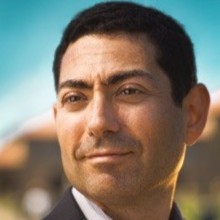
Justice Mariano-Florentino Cuéllar
President
Carnegie Endowment for International Peace
Led Newsom's AI working group; co-author of framework underlying SB-53
Mariano-Florentino “Tino” Cuéllar is the 10th President of the Carnegie Endowment for International Peace, the world’s oldest international affairs think tank, a position he has held since October 2021. A scholar, jurist, and public servant of extraordinary breadth, Cuéllar previously served as a Justice of the Supreme Court of California from 2015 to 2021 — appointed by Governor Jerry Brown — and before that as Stanley Morrison Professor of Law and Director of the Freeman Spogli Institute for International Studies at Stanford University.
Cuéllar was born in Matamoros, Tamaulipas, Mexico, and immigrated with his family to Calexico, California at age 14. He earned his bachelor’s degree magna cum laude from Harvard University, a Juris Doctor from Yale Law School, and a PhD in political science from Stanford University. He has served in the government branch across three presidential administrations — Clinton, Obama, and Biden — including as Special Assistant to President Obama for Justice and Regulatory Policy. He serves on the Harvard Corporation, chairs the board of the William and Flora Hewlett Foundation, and is a member of the American Academy of Arts and Sciences and the National Academy of Sciences Committee on the Social and Ethical Implications of Computing Research.
Following Governor Newsom’s veto of SB-1047 in September 2024, Newsom announced that Cuéllar, along with Dr. Fei-Fei Li and Dean Jennifer Tour Chayes, would lead a working group to develop an empirical, science-based framework for California AI governance. That group published a landmark working report in March 2025 — the first such effort by any state government — providing the policy foundation for SB-53. The report emphasized evidence-based policymaking, transparency, and a “trust but verify” approach to frontier AI regulation.
At the signing of SB-53 on September 29, 2025, Cuéllar issued a joint statement with Li and Chayes: “The Transparency in Frontier Artificial Intelligence Act moves us towards the transparency and ‘trust but verify’ policy principles outlined in our report. As artificial intelligence continues its long journey of development, more frontier breakthroughs will occur. AI policy should continue emphasizing thoughtful scientific review and keeping America at the forefront of technology.”
Cuéllar’s scholarship addresses problems in administrative law, artificial intelligence and the law, international affairs, and public health and safety. His publications include Government by Algorithm (2020) and Governing Security (Stanford University Press, 2013).