
































































Senate Bill 53
Section 3 of the bill clearly defines CalCompute's purpose, the framework report and the consortium to write it. So why wait for permission?

A framework for
Compute is a vital and limited resource for California's public research ecosystem, and without it, that ecosystem is already atrophying.








About
CalCompute is California's plan for a public cloud computing cluster, giving the state's researchers the computing power to build AI that is safe, ethical, equitable and sustainable.
California's research institutions are being priced out of frontier AI. Academic labs built two thirds of the notable machine-learning models a decade ago and only about one in ten since. Five years of a rented eight-chip machine costs more than three times buying one, and most academic researchers surveyed have no cloud budget at all.
New York, finding access prohibitively expensive and concentrated in a few large companies, has already built shared computing for its universities - Empire AI's most prominent board member has joined us to build the same for California. Other states are following suit, but with our Framework Report for Public AI that is safe, ethical, equitable, and sustainable, California still has the opportunity to lead globally.
Our consortium of researchers spans six University of California campuses, Stanford, Berkeley Lab, Empire AI, UNA-USA, and is supported by a coalition of partnered organizations and California stakeholders.
Universities and labs: computing power your researchers can count on, and a path back to the frontier of AI research.
State government: leadership in public-interest AI and a framework other communities, states, and nations can follow.
Philanthropy: a chance to found public AI infrastructure and save California's dwindling research ecosystem.
Backing can be a letter of institutional support, a funding commitment, a partnership or a conversation.
Get involved Stronger Together
14 R1 · 16 R2 · 24 research colleges · 3 national laboratories
Stronger Together
14 R1 · 16 R2 · 24 research colleges · 3 national laboratories
The Consortium
The researchers developing a framework for the creation of California's public cloud computing cluster.

Director, San Diego Supercomputer Center
UC San Diego


At-Large Board Member, Empire AI


Founder, Cal-ICOR
UC Berkeley


Professor of Political Science and Public Policy; Chair, Department of Political Science
UC Riverside


Director of Cyberinfrastructure and Research Technologies
UC Merced


Chief Technology Community Officer, Kapor Center

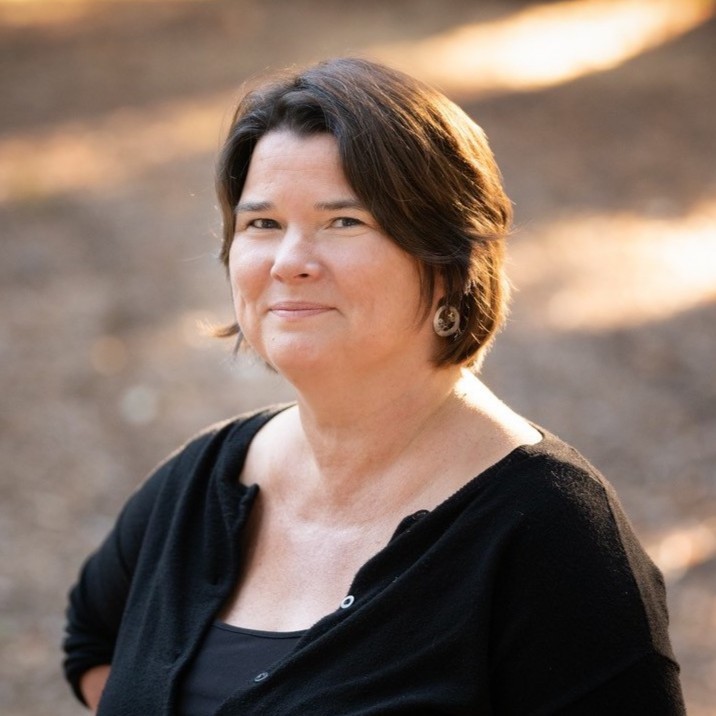
Executive Director, CROSS & OSPO
UC Santa Cruz


Assistant Professor of Computer Science and Engineering
UC Santa Cruz

Co-Chair, UNA-USA Human Rights Affinity Group


Executive Director and Co-Founder, BASE
UC Berkeley

Founder, SoCal Blender Group

Professor, Goldman School of Public Policy
UC Berkeley
Framework
A seven-element framework for the creation of a public cloud computing cluster that advances the development and deployment of artificial intelligence that is safe, ethical, equitable and sustainable.
A landscape analysis of California's current public, private and nonprofit cloud computing platform infrastructure.
An analysis of the cost to the state to build and maintain CalCompute and recommendations for potential funding sources.
Recommendations for the governance structure and ongoing operation of CalCompute.
Recommendations for the parameters for use of CalCompute, including a process for determining which users and projects will be supported.
An analysis of the state's technology work force and recommendations for equitable pathways to strengthen it.
A detailed description of any proposed partnerships, contracts or licensing agreements with nongovernmental entities, demonstrating compliance with CalCompute's ownership and hosting requirements.
Recommendations regarding how the creation and ongoing management of CalCompute can prioritize the use of the current public sector work force.
Law
After three years in legislative limbo, CalCompute finally passed as part of Senate Bill 53. Then the state government failed to appropriate it, so we, the community that needs it, picked up the torch to do it ourselves.
Section 3 of the bill clearly defines CalCompute's purpose, the framework report and the consortium to write it. So why wait for permission?
Next
Now
FAQ
CalCompute is California's plan for a public cloud computing cluster, called for in Senate Bill 53 and signed in September 2025, giving the state's researchers the computing power to build AI that is safe, ethical, equitable and sustainable. The law calls for a consortium to write the framework for creating it, the work the CalCompute Consortium is doing now.
The CalCompute Consortium, formed in May 2026 and made up of the kinds of member the law names for the work: representatives of research institutions and national laboratories, experts in technology and artificial intelligence, ethicists and public interest advocates. It is open to anyone with a stake in public AI.
The plan the law requires for creating and operating CalCompute. Its seven elements cover California's existing cloud infrastructure, its cost and how to fund it, its governance, who may use it, the state's technology work force, partnerships with nongovernmental entities and the public sector work force. Our consortium is writing it now and publishes its research as it goes.
Startups and academic researchers, in the bill's author's words, and more broadly research and innovation that benefits the public, which is the purpose the law sets. Exactly who may use it, and how projects are chosen, is one of the seven elements our consortium is writing into the Framework Report now.
The law requires the framework to advance AI that is safe, ethical, equitable and sustainable, and much of California is arid. We are studying cooling methods that do not evaporate water, and working with manufacturers of atmospheric water generators on whether a data center can return more water to its community than it draws.
Email [email protected]. The work is open to everyone. Researchers can take on one of the seven framework elements, institutions can tell us what they need, partners can lend compute or data, and writers and designers can help publish the work. No University of California affiliation or prior experience is required.








Volunteer
CalCompute's framework is being written by a grassroots community of university researchers, students and partner organizations across California. If you have time, expertise, data or compute, California needs your help.
Ways to contribute